Subject: 知縣 zhīxiàn mandarin as local magistrate
Culture: Sino-Manchurian
Setting: late Qing empire, China 19thc
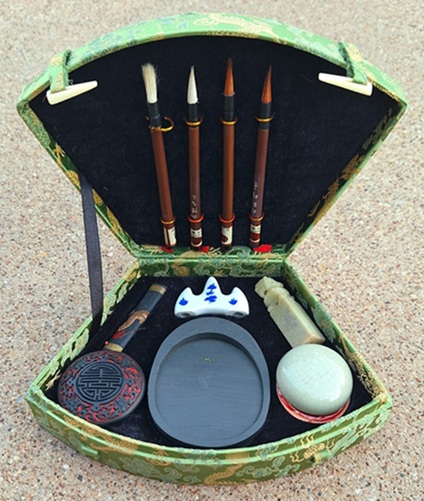
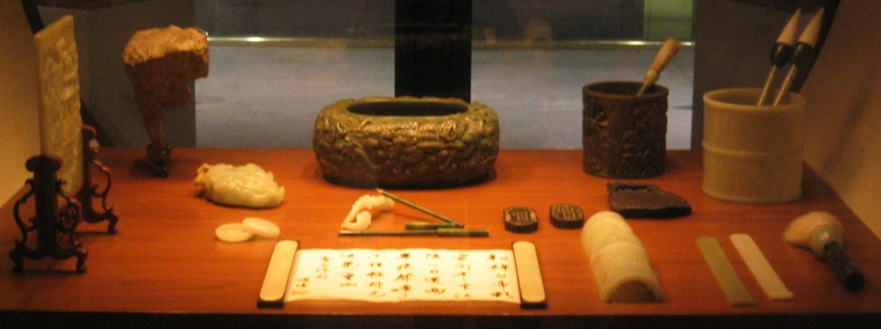
Object: stationery including 文房四寶 wénfáng sì bǎo 'four scholarly treasures': 毛筆 máobǐ brush, 紙 zhǐ paper, 墨 mò ink stick, 硯 yàn ink stone,
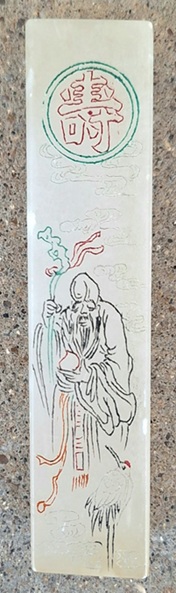
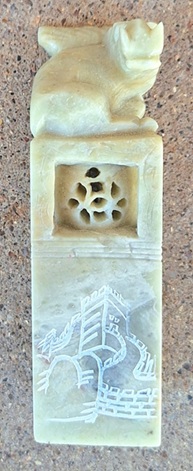
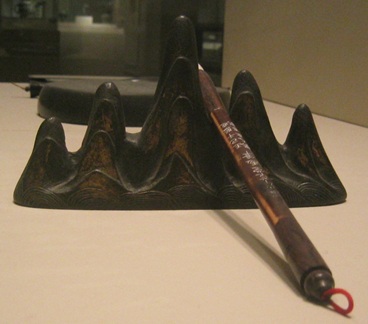
笔架 bǐjià brush rest, 笔挂 bǐguà brush hanger, 镇纸 zhènzhǐ paperweight, 笔洗 bǐxǐ brushwash, 圖章 túzhāng seal, 印泥 yìnní seal wax
World Market *
* Crow Collection of Asian Art
*
* Brooklyn Museum > China Gallery
"Brush Rest in the Form of a Mountain China, Qing Dynasty, possibly 18th century Bronze, traces of gilding"
"Brush for C.C. Wang (Wang Chi-ch'ien, b. 1907) China, 20th century Bamboo handle, wood, animal bristles"
*
* Brooklyn Museum > China Gallery
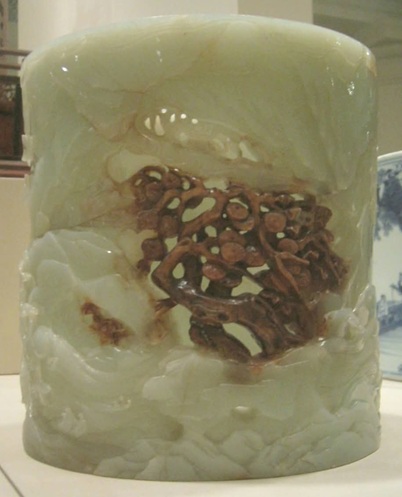
"Brush Jar China, Qing dynasty,18th century White jade ... This elaborately carved jade brush jar represents not the restraint usually associated with scholarly taste but the contrasting sumptuous decorative qualities of imperial taste. On the back of the jar is a poem attributed to the Qianlong Emperor (reigned 1735-1795) describing the cry of the cranes, which recalls the passage of time (cranes are a symbol of long life), and the legendary islands of the Immortals in the Eastern Sea. As much an object of display as a practical holder for brushes, the jar is carved with a scene illustrating the poem. The artisan has taken advantage of the naturally colored veins of the stone to render one pine tree in brown surrounded by white cliffs."