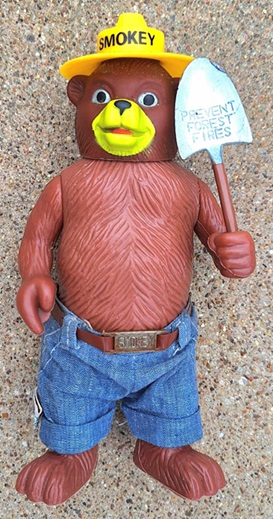
Subject: Smokey Bear
Culture: American
Setting: National Park Service, mid-20thc and after
Event Photos
* Billard/Moran 2020-02 online
"The individual connection citizens feel with the public spaces guarded by Smokey and the NPS has been central to the NPS’s branding efforts and can be seen clearly in their social media strategies. Rather than actively producing original brand content, the NPS relies on crowdsourced branding materials contributed by citizens through social media, which collectively builds a brand image reliant on their network of brand participants. The primary social media feeds used by the NPS— Twitter, Facebook, and Instagram— utilize the hashtag #findyourpark to source images from their wide network of visitors to populate their feeds. Currently, the Instagram version of the hashtag has been attached to more than one million images from users around the United States. Given the centrality of users to the maintenance of the NPS brand and the
personal attachment individuals have to the public spaces being promoted, it is unsurprising that individuals feel an identity affiliation with
the brand resources used by the NPS. Moreover, the move from “closed” to “open” brands seen in marketing in recent years (Pitt et al. 2006) affords brand communities a stake in the creative direction of the brand, thus opening space for brand imagery to be utilized in ways that may
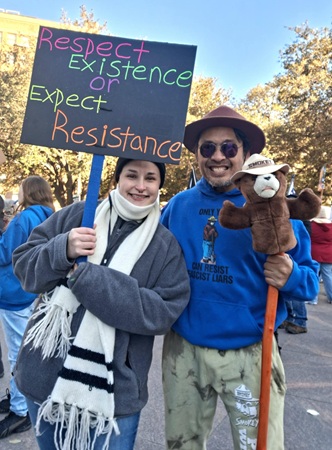
support or contest the brand’s institutional image. Political activists’ use of NPS brand imagery as resistance against the Trump administration is
therefore a prime example of how civic engagement arises from brand communities.
"Activists’ use of NPS brand imagery is especially interesting given that they used it both to contest the burgeoning authoritarian tendencies of
the incoming administration and to reify the traditional brand of the NPS as a public- serving entity. Rather than seeing this as an example of brand signifiers’ vulnerability to hijacking for alternative causes, the NPS case illustrates the complexities of brand management in a net worked era (Billard and Moran 2018). Despite the NPS being a govern mental agency and thus subordinate to the executive administration, its reliance on the public for the development of its brand image distributes power over the brand’s meaning across a network of individuals and institutions. Consequently, when institutional powers attempt to reclaim centralized control over the brand— for instance, the Trump administration’s removal of information about climate change from the NPS’s online presence— relations within the brand’s network are disturbed.
"The locus of control over the brand’s meaning no longer resides with the branded entity but rather is collectively held across the network of
brand participants (albeit unevenly). This decentralization of power means that the government cannot prevent its own subordinate brand from becoming a site at which countergovernmental resistance can organize. Moreover, the “openness” of the NPS’s brand imagery (including and
especially Smokey Bear) offers a set of communicative resources through and with which the newly resistant brand network can express its collective political aims."
Primary Sources
*
"
Secondary Sources
*
"
Field Notes
1.