Subject: rebelde rebel
Culture: Yucatec Mayan
Setting: Caste War, Yucatan mid 19th-early 20thc
Context (Event Photos, Primary Sources, Secondary Sources, Field Notes)
* Reed 2001 pvii (Howard F Cline, "Foreword" pvii-viii)
"The war of the castes in Yucatan is one of the least known most colorful episodes in Mexican history. Indeed, if told offhand that as recently as 1848 the descendants of the ancient Maya, after centuries of subjugation, fought their way across the peninsula of Yucatan and came within a hair's breadth of driving their white masters into the sea, one might suspect a literary hoax. But this is what happened. Yucatecan patriots, Mexican generals, and even American mercenaries, facing what we now call guerrilla tactics, simply gave up hope of winning total victory. Despite huge losses in action, recurrent famine, and the ravages of cholera, the rebels held control of the jungles of eastern Yucatan for the rest of the century. Occasional raids brought them food, guns, alcohol, and prisoners -- white men and women who ended their days as slaves in Maya villages. And, beginning with the cult of the Speaking Cross, which sprang up in the darkest days of the war, the Maya developed their own society, a new synthesis of the Spanish colonial and ancient Maya cultures."
Costume
* Sayer 1985 p
"
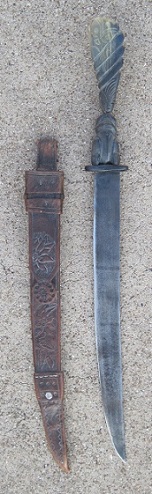
Machete
* Peterson/Feaser 1966 p44-45
"While some knives have been fashioned primarily for fighting, others have been designed for the more work-a-day purpose of cutting brush, and then put into use as weapons. One of the best known of these brush-cutting knives in America is the machete. This long-bladed cutter is the ideal tool for hacking down vines, lopping off small branches, harvesting sugar cane and performing dozens of other tasks necessary in a tropical or sub-tropical or sub-tropical climate. Machetes became highly popular in the West Indies, Central and South America and even in Africa (where they were called pangas). To a slight extent they have been used in the Southern United States as well. Equipped with a keen machete a skilled man can do almost unbelievable things. The blade size and weight are designed for the wide sweeping motions of heavy cutting, yet controllable so that the top of a coconut can be whisked off without damage to the hand holding it. Most machetes are simple cheap tools; a few have been more elaborate, having bird and animal heads sculptured on the handles, well finished grips and blades, and fancy scabbards of tooled leather. These decorated specimens were the machetes of the plantation owners, the foremen and overseers who might have need of one of the big knives but wanted one that would indicate a position of importance. Some special machetes have even been used as sidearms for noncommissioned officers in military organizations."
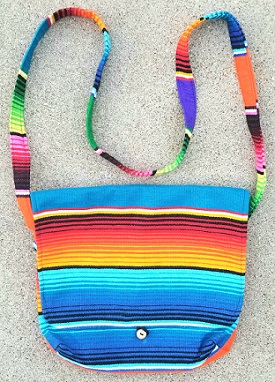
Bag
*