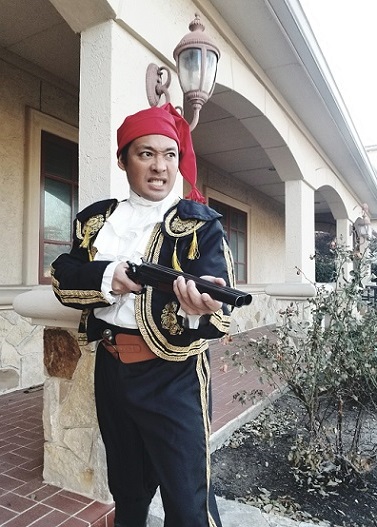
Subject: mafioso gangster uomo d'onore 'man of honor'
Culture: Sicilian
Setting: La Cosa Nostra, western Sicily mid-late 19thc
Event Photos
* Riall 2009 p97
"The establishment of paramilitary rural police forces (carabinieri, gendarmerie) in most Italian states by the 1830s is also indicative of a preoccupation with pauperism and crime. In some respects, the specific criminalisation of brigandage was symptomatic of a broader process, whereby the judicial authorities sought to control and contain the population of rural areas. Bandits were designated by the political and judicial authorities, and classified as outlaws (fuor-bandito) for being a member of an armed gang. In the Two Sicilies, those designated as bandits were condemned to death in their absence, their names were publicly displayed on a list in town squares and highways, and campaigns were mounted to bring them to justice. Bandits thus acquired a unique significance as a symbol of rural lawlessness and as an exceptional threat to civilised society."
* Leeds 1974 p103
"General Govone, after leaving his military command in Sicily, reported to Parliament in December 1963 that 'there is an old, ineradicable prejudice by which Sicilians utterly despise the man who gives evidence against even the worst criminal. This attitude of silence has a special name among the common people -- omertà or submission. Fear of possible vendettas is, also, all too justified. Every day people were killed even in the centre of a town for suspicion of being in touch with the police ... This is a tremendous problem for Sicily. Since nobody will go to the ordinary courts for redress, everyone seeks his own method of self-defence.'"
Primary Sources
*
"
Secondary Sources
*
"
Field Notes