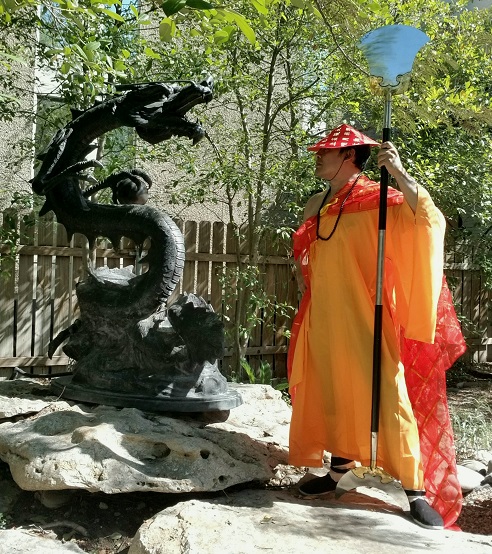
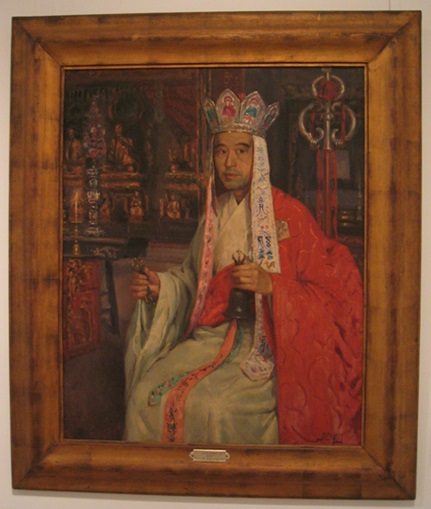
Subject: 和尚 héshàng monk
Culture: Chinese Buddhist
Setting: Qing empire, China 18-19thc
Event Photos
* Thought.Co online > The legend of Shaolin monk warriors
"During the nineteenth century, the monks of Shaolin were accused of violating their monastic vows by eating meat, drinking alcohol and even hiring prostitutes. Many saw vegetarianism as impractical for warriors, which is probably why government officials sought to impose it upon Shaolin's fighting monks."
Primary Sources
* Kuhn 1990 p111
"In view of the prominent place of Buddhist monks among sorcery suspects in the 1768 scare, it is somewhat surprising that the two major eighteenth-century collections of supernatural tales (by P'u Song-ling and Yuan Mei) picture the Buddhist clergy as relatively benign. Sorcery aplenty is attributed to Taoists .... By contrast, Buddhists are attacked mainly for hypocrisy or for immorality (particularly sexual license -- a theme common in European anticlericalism). The phrase 'sorcerous Taoists and licentious Buddhists' (yao-tao yin-seng) sums up the difference. We shall have to look beneath the level of elite story-writers to discover a plausible source for poular fears of monks."
Secondary Sources
*
"
Field Notes
>