Subject: 侍 samurai warrior
Culture: Japanese
Setting: Edo period, Japan 17th-mid 19thc
Brooklyn Museum > Korea & Japan *
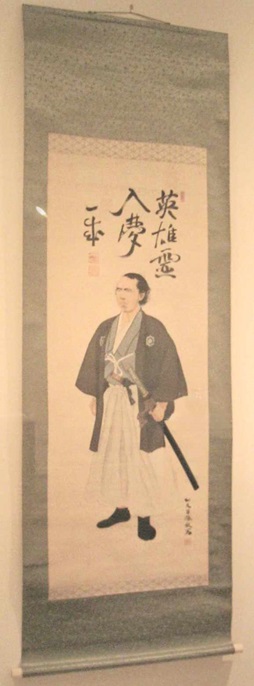
"Kôbun Kikusen (Japanese, b. 1783) Portrait of Sakamoto Ryôma Japan, Meiji period, late 19th century Hanging scroll; ink and color on silk ...
Sakamoto Ryôma (1835-1867) was a lower-class samurai who lived through the turbulent years of Japan's opening to foreign trade and culture. Dressed in formal attire, he holds a long sword at this hip with his left hand and has a short sword tucked in his waist sash. The five-character inscription at the top reads, 'spirit of the hero in dreams.' Ryôma pioneered development of the Japanese navy, and his charismatic leadership led to the overthrow of the Tokugawa shogunate rulers. He remains a revered and celebrated historical icon in Japan."
* Higgins Armory Museum > Scimitars to Samurai: Arms and Armor around the World
"The Samurai, Warrior of Japan
Nineteenth-century photographs courtesy of the Smithsonian Institution
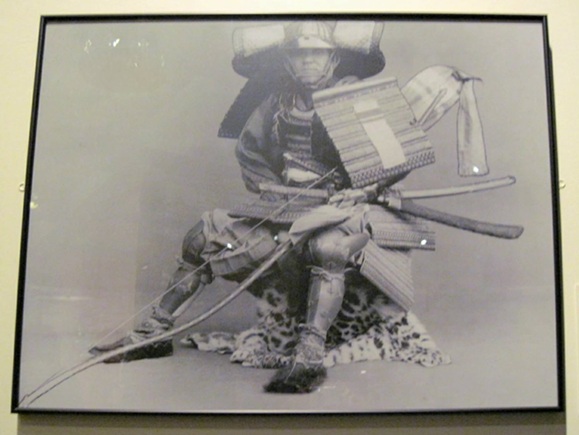
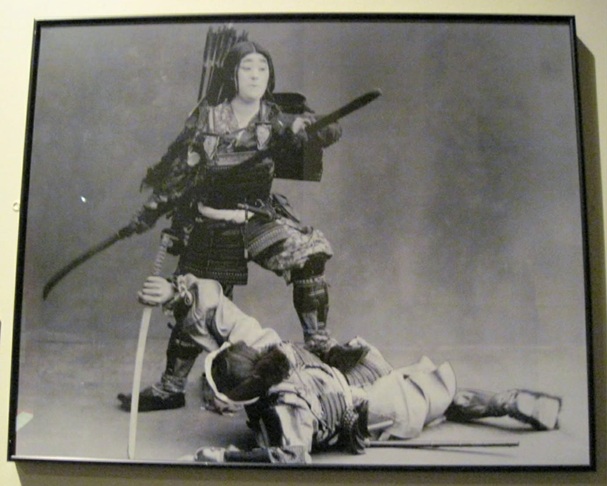
Bound in a rigid code of courage and tradition, the Samurai was a central figure in the history and culture of Japan for centuries. In both photographs here, the figures wear the traditional elaborate armor and carry the weapons of the Samurai, but they are presented in very different situation
"In the photograph on the right, the standing Samurai crushes a vanquished foe in a traditional victor's pose; but in a major departure from tradition, the standing figure is a woman, her white-painted face serene, her hair hanging smoothly, uncovered by a helmet. Historical justification exists for this female Samurai: the wives of some medieval war-lords were said to have accompanied their husbands into battle.
"In the photograph on the left, the seated Samurai faces the world with an expression of wary determination, crowned by an elaborate helmet that both protects him and intimidates potential enemies, and amply armed wit the tools of his trade -- two swords an bow." [SIC]