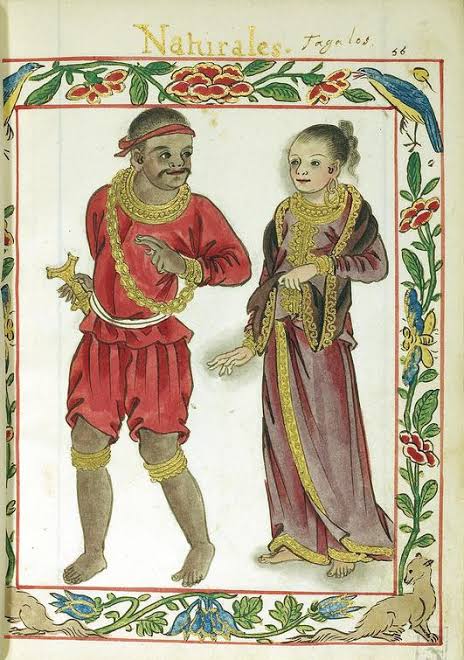
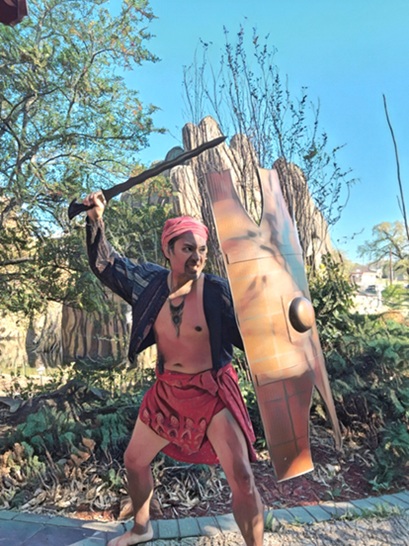
Subject: ᜋᜑᜎᜒᜃ maharlika / maginoo warrior
Culture: Tagalog
Setting: southwestern Luzon 16thc
Event Photos
* Scott 1994 p232
"Heads were brought back as trophies of war. When the Spaniards invaded Batangas towns, they often found enemy heads impaled on stakes, and bayubay meant 'to hang the heads of the vanquished on long bars, as these natives used to do.' Pugot and sumbali meant to cut a head off, and tungol or bungol was to grab someone from behind and cut his throat. Perhaps the iwa -- a dagger wide and flat at the end -- was a weapon designed for head taking. Father Placensia, in his 1592 Relación, said, 'When some chief dies, to avenge his death they had to cut off many heads, with which they would make many feasts and dances', and the Boxer Codex said that when they brought back a head from war, 'they would hold a drunken revel for two or three days.' But the best known description came from Dr. Morga in 1699:
They show great dexterity when they go after their opponent. Grabbing him by the hair with one hand, they cut off his head with the other with one stroke of their balarao ... and carry it off since they keep them hanging in their houses afterwards where they can be seen; of these they make a display so they will be taken as braves and avengers of their enemies and their injuries. [references omitted]
Primary Sources
*
"
Secondary Sources
*
"
Field Notes
1.