Subject: duine-uasal 'man of pride' clan warrior
Culture: Highland Scot
Setting: clan warfare, Scottish Highlands 16-17thc
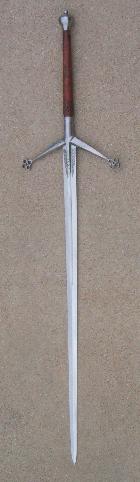
Object: claidheamh da laimh 'great sword' claymore
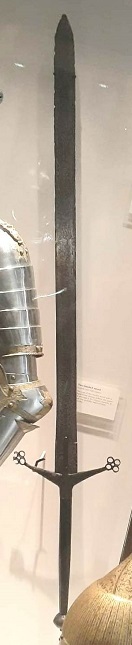
Royal Armouries Museum > War Gallery *
"Two-handed sword Scottish, mid 16th century This type of two-handed sword with its characteristic sloping quillons
and quatrefoil terminals is the original claymore. Its blade was probably imported from Germany." ...
Windlass Steelcrafts *
* Royal Ontario Museum > Samuel European Galleries > Arms & Armor
This claymore of the 1500s is a good example of the distinctive regional types of arms that evolved in the British Isles. An infantry weapon, it is similar to the two-handed sword used in Continental Europe at the same time ..., but is characterized by a slightly shorter blade and angled guards ending in pierced quatrefoils. The name itself comes from the Gaelic word claidheamohmor, meaning 'great sword', and was first applied to a type of Scottish broadsword developed from Medieval swords and used into the early 1600s."
Le <<claymore>> du XVIe siècle est un bon exemple des types régionaux d'armes en usage sur les Îles britanniques.
Cette arme d'infanterie est semblable à l'espadon à deux mains en usage en Europe continentale à la même époque.
Elle s'en distingue toutefois par sa lame légèrement plus courte et sa garde à angle qui se terminé en quatrefeuilles ajourés.
Le nom claymore vient du gaélique <<claidheamohmor>> qui signifie grande épée. À l'origine,
il désignait un tipe d'épée écossaise dérivé des épées médiévales en usage jusqu'au début du XVIIe siècle."
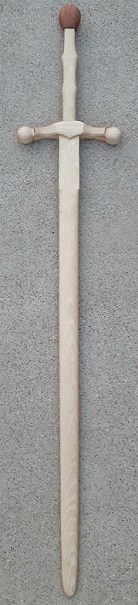
* Armour Class #SC09
Hollow Earth Swordworks *
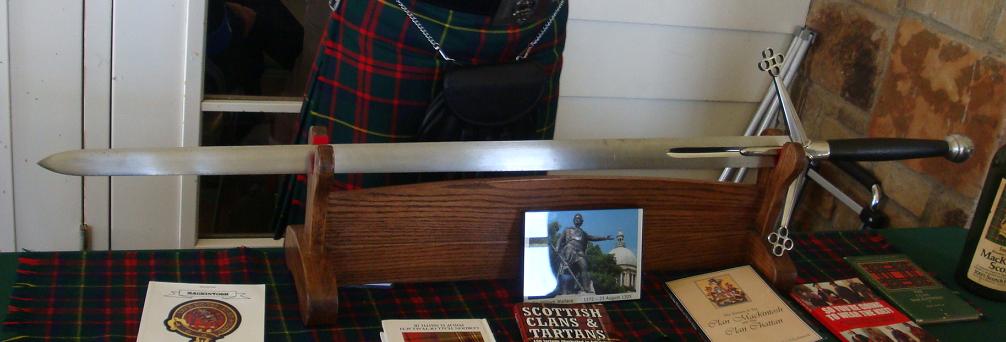
* Tartan Day Ceilidh 2010